Ingredients
Reading a skincare ingredient list for what it can actually tell you
Ingredients are listed in descending order until 1 percent, then in any order. Here is which parts of a cosmetic label carry information and which do not.
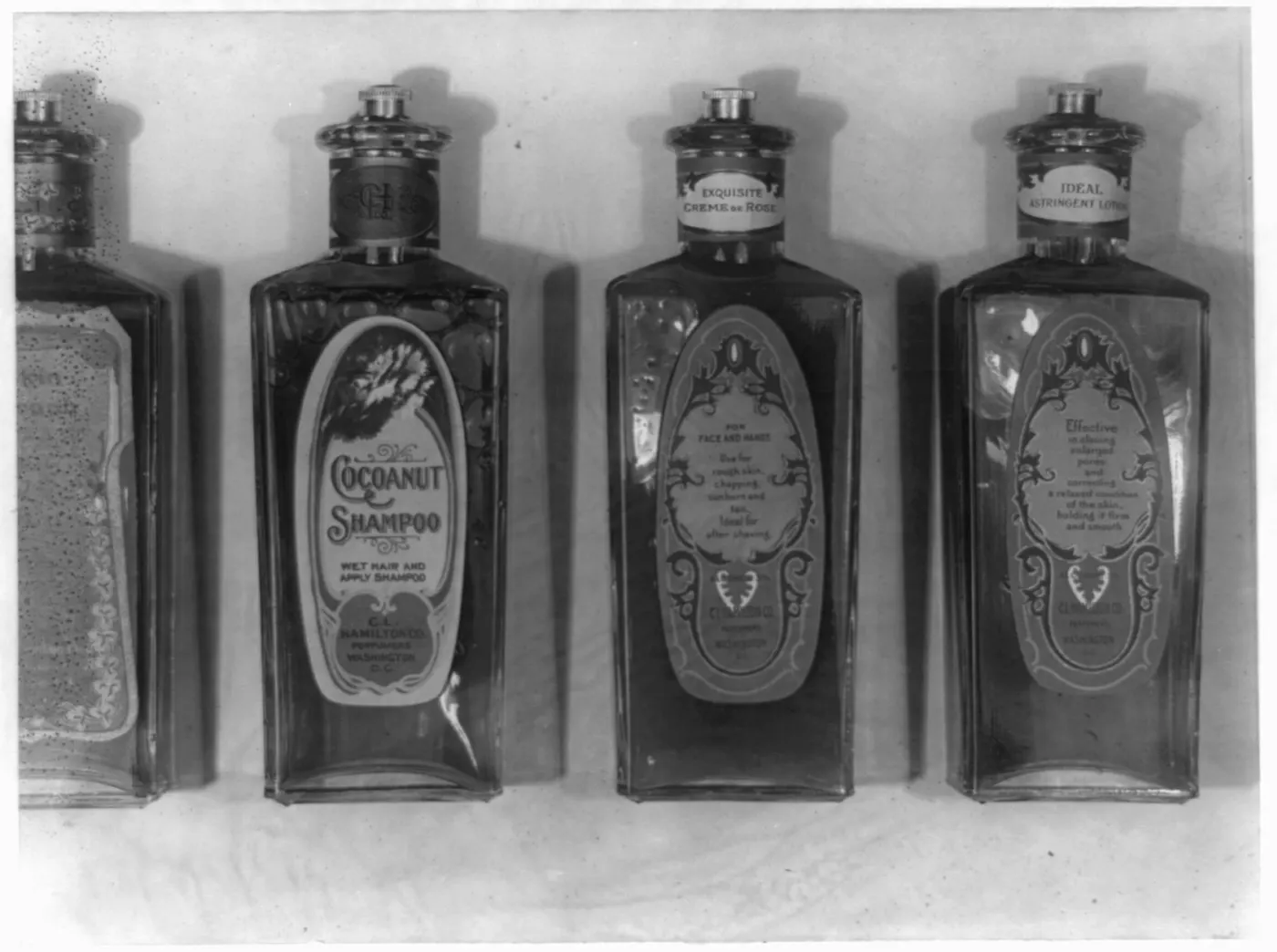
An ingredient list looks like a ranking and is only partly one. United States cosmetic labelling has a specific, published structure, and once you know where that structure stops being informative you can stop reading a list as though every line were ordered.
This guide covers what the label is required to carry, where the ordering rule ends, what turns a cosmetic claim into a drug claim, and the two ingredient categories where FDA has published actual numbers. It cites the FDA pages rather than repeating industry summaries.
The ordering rule and the point where it stops
Ingredients must be listed in descending order of predominance, which is the part everyone knows. The exception is the part that matters: ingredients present at a concentration not exceeding 1 percent may be listed in any order after the listing of the ingredients present at more than 1 percent.
So a list divides into two zones. Above 1 percent, position is information: the first few names really are the bulk of the formula. At or below 1 percent, position is arrangement, and an active placed fourth from the end tells you nothing about whether it is present at 0.9 percent or 0.01 percent.
Colour additives sit outside the ordering entirely. They may be listed in any order, at any concentration, after the ingredients that are not colour additives. A list that ends with a run of colour names has not told you those colours are the smallest components.
| Where it appears | Rule that applies | What you can conclude |
|---|---|---|
| Above 1 percent | Descending order of predominance | Earlier names are present in larger amounts |
| At or below 1 percent | Any order after the above-1-percent block | Nothing about relative amounts |
| Colour additives | Any order, any concentration, after non-colour ingredients | Nothing about amount or ranking |
The boundary between the first two rows is not marked on the label, which is why an ingredient list is readable at the top and ambiguous at the bottom.
The required elements, and the type size they are printed in
Two elements are always present because they are required. The net quantity of contents must accurately reveal the quantity in the container in terms of weight, volume, measure, numerical count or a combination, and the ingredient declaration must appear in type not less than 1/16 inch in height, reduced to 1/32 inch where the labelling surface is under 12 square inches.
That type-size floor explains a familiar frustration. On a small bottle the law permits half-height type, so the smallest packages carry the least readable lists, and the information is legally present while being practically hard to read. Photographing the panel and enlarging it is a reasonable response.
Expiration dating is the element that is not required. There are no U.S. laws or regulations that require cosmetics to have specific shelf lives or expiration dates on their labels, and FDA treats determining shelf life as the manufacturer's responsibility. A date on a cosmetic is therefore voluntary rather than a regulated guarantee.
- Find the net quantity of contents and write it down in one unit
- Photograph the ingredient panel and enlarge it rather than squinting at 1/32 inch type
- Read the names above the point where the list obviously thins out as the real formula
- Treat every name after that as unranked
- Note whether a date is printed at all, since none is required
Where a cosmetic claim becomes a drug claim
The line is drawn by intended use rather than by ingredient. A cosmetic is intended to be applied to the human body for cleansing, beautifying, promoting attractiveness or altering the appearance. A drug claim involves treating or preventing disease, or otherwise affecting the structure or any function of the human body.
This is why label wording is deliberate rather than clumsy. The difference between describing an appearance and describing a change in the skin's structure is the difference between two regulatory categories, and products stay on the cosmetic side of it by describing what you will see.
Read the front of the package as a statement about category, not about strength. A product making only appearance claims has told you it is not being marketed as affecting structure or function, which is useful information about how it is regulated and silent about how well it works.
The two ingredient families with published numbers
Alpha hydroxy acids are the clearest case. FDA's guidance describes products where the AHA concentration is 10 percent or less and the final product has a pH of 3.5 or greater, and where the product is formulated to protect the skin from increased sun sensitivity or the package directions tell consumers to use daily sun protection.
The figure behind that is specific. After four weeks of AHA application, volunteers' sensitivity to skin reddening produced by UV increased by 18 percent, and their sensitivity to UV-induced cellular damage doubled on average. One week after the treatments were halted, researchers found no significant differences in UV sensitivity among the various skin sites.
Sunscreen is the second family, and it is regulated as a drug rather than a cosmetic. FDA points to SPF values of 15 or higher, broad spectrum labelling for protection against both UVA and UVB, reapplication at least every two hours, and water-resistance labels that must state whether the product remains effective for 40 minutes or 80 minutes when swimming or sweating. An average-sized adult needs at least one ounce to cover the body.
| Subject | Published figure | Where it comes from |
|---|---|---|
| AHA concentration in the guidance | 10 percent or less | FDA alpha hydroxy acids page |
| Final product pH in the guidance | 3.5 or greater | FDA alpha hydroxy acids page |
| UV reddening sensitivity after four weeks of AHA use | increased by 18 percent | FDA-reported study findings |
| Persistence after stopping AHA use | no significant difference after one week | FDA-reported study findings |
| Minimum SPF FDA points to | 15 or higher | FDA sunscreen consumer page |
| Sunscreen reapplication interval | at least every two hours | FDA sunscreen consumer page |
| Water resistance label options | 40 minutes or 80 minutes | FDA sunscreen consumer page |
These are the published numbers, quoted as published. Where a label gives no figure at all, there is no equivalent number to check it against.
Before you buy
- Photograph the ingredient panel and enlarge it before reading
- Identify roughly where the list stops being ordered and treat everything after as unranked
- Look past colour additive names, which are unordered at any concentration
- Write down the net quantity of contents so you can compute a price per millilitre
- Check whether an acid product's directions mention daily sun protection
- Check a sunscreen for broad spectrum, an SPF of 15 or higher, and a 40 or 80 minute water-resistance statement
- Note whether any date is printed, since none is required
Questions readers ask
- If an active is listed near the end, is it present in a token amount?
- The list cannot tell you. Ingredients present at a concentration not exceeding 1 percent may be listed in any order after those present at more than 1 percent, so a name late in the list could be at 0.9 percent or at a tiny fraction of that. The only place position carries concentration information is above the 1 percent boundary.
- Why is the ingredient list so small on little bottles?
- Because the required type size drops. The ingredient declaration must be not less than 1/16 inch in height, or 1/32 inch where the labelling surface is under 12 square inches. On a small package the law allows half-height type, so the information is legally present and physically hard to read. Photograph the panel and zoom in.
- Does the absence of an expiration date mean the product does not expire?
- No. There are no U.S. laws or regulations requiring cosmetics to carry expiration dates, and FDA treats shelf life as the manufacturer's responsibility. The product still degrades, and FDA notes that dipping fingers in adds bacteria and fungi and that heat can break preservatives down.
- How do I tell a cosmetic claim from a drug claim on the front of a package?
- By what the claim is about. A cosmetic is intended for cleansing, beautifying, promoting attractiveness or altering the appearance. A drug claim is about treating or preventing disease, or affecting the structure or any function of the body. Wording that stays strictly in the first category is telling you which regulatory route the product took.
- What should an acid product's label say about sun protection?
- FDA's described conditions are an AHA concentration of 10 percent or less, a final product pH of 3.5 or greater, and either a formulation that protects the skin from increased sun sensitivity or package directions telling consumers to use daily sun protection. The underlying finding is an 18 percent increase in UV reddening sensitivity after four weeks of use.
Sources
- U.S. Food and Drug Administration — Cosmetics Labeling Guide: ingredient order, the 1 percent exception, colour additives, net quantity and type size — checked 2026-11-03
- U.S. Food and Drug Administration — Alpha Hydroxy Acids: concentration and pH figures, the 18 percent UV sensitivity finding and the Sunburn Alert wording — checked 2026-11-03
- U.S. Food and Drug Administration — Sunscreen: how to help protect your skin from the sun, including SPF, broad spectrum, reapplication and water resistance — checked 2026-11-03
- U.S. Food and Drug Administration — Shelf Life and Expiration Dating of Cosmetics — checked 2026-11-03
Some links on this site can earn us a commission. That does not change which product a guide recommends, and it adds nothing to your price. Advertising is not enabled on this site yet. When it is, ads will be labelled and kept visually separate from the guides.